A Browser That Helps You Breathe, Not Hustle
The modern web can feel like a race you never signed up for. You open your laptop to answer a message or read one article, and within minutes you are flooded with notifications, auto‑playing videos, and pop‑ups competing for your attention. In that environment, it is easy to forget that technology is supposed to support your life, not constantly speed it up. Many people quietly wish for something simpler: a browsing experience that feels calm, safe, and genuinely helpful.
That longing is why the idea of a safety‑first, AI‑native browser is so compelling. Instead of being just another tool that demands your energy, this new kind of browser is designed to protect your attention, guard your privacy, and make it easier to focus on what really matters—whether that is studying, building a project, or just learning something new at your own pace. It is less about doing “more” and more about helping you feel in control again when you go online.
H2: Safety-First Intelligence for Everyday People
Many AI browsers promise power and automation, but not all of them are built with safety at the center. That matters, because the same AI that can summarize an article or help you write an email can also be used by attackers to create more convincing phishing pages and scams. In that landscape, a browser that takes a safety‑first approach feels different. It is built around the assumption that your privacy, your data, and your confidence online are non‑negotiable.
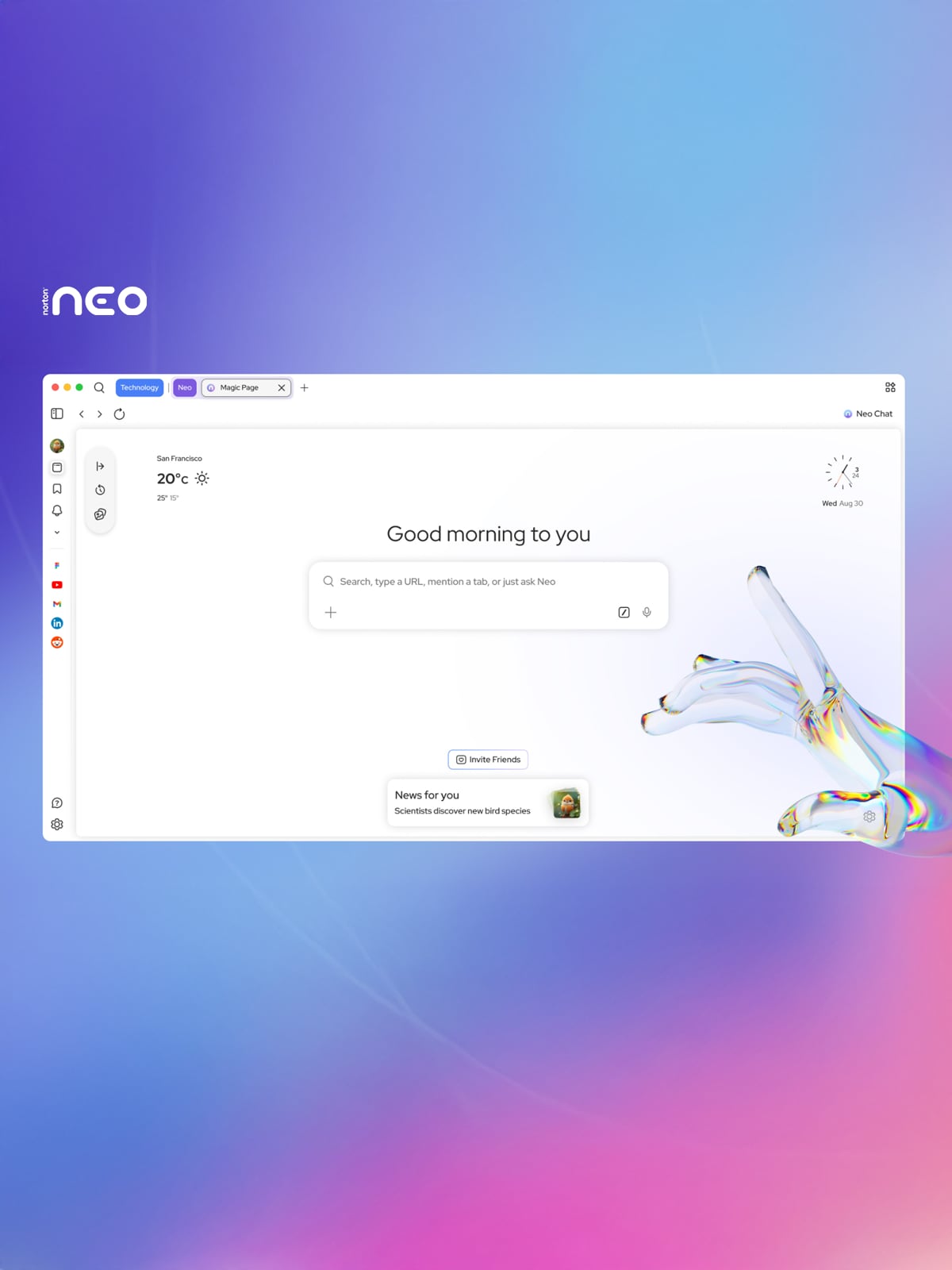
One example of this is Norton Neo, described as the world’s first safe AI‑native browser. It combines built‑in ad‑blocking, strong phishing detection, and Norton Web Shield—a Safe URL detection system that uses AI and behavioral analysis to scan websites and embedded content in real time. If a site looks deceptive or malicious, Neo can block it before you interact with it, reducing the risk of accidentally entering credentials or downloading something harmful. At the same time, Neo uses AI to actually help you with your day: summarizing articles, suggesting reminders, or rounding up your open tabs with what Norton calls a “zero‑prompt” approach. That means the browser can anticipate needs and offer assistance without forcing you to learn complex commands or workflows.
Just as importantly, privacy is treated as a design principle, not an afterthought. Neo’s configurable memory gives you control over what the browser remembers—like key details for ongoing projects or favorite sites—and what it should forget or never store at all. Everything the AI retains is visible and editable in your settings, so there is no mystery profile being built behind your back. For students, founders, and creators who want to move fast without feeling exposed, that combination of help and transparency can be deeply reassuring.
In the middle of your article, you can naturally mention it like this: many people are now exploring tools such as Norton Neo, which try to blend world‑class safety with AI features that genuinely simplify everyday browsing instead of making it more stressful.
H3: Learning, Creating, and Growing at Your Own Pace
Beyond protection, a browser can also shape how you grow. When you are not constantly worried about malicious links or overwhelmed by tab chaos, it becomes easier to treat your time online as a chance to learn on purpose. AI‑native browsers like Neo are designed to support that shift by turning the browser from a passive window into a kind of command center for your ideas. Features like the Magic Box, AI chat, and instant webpage summaries let you ask questions, scan content, and organize tasks from a single place, instead of jumping between dozens of apps and tools.
For example, if you are researching a new topic, Neo can generate quick summaries of articles, surface key arguments, and help you decide which sources deserve deeper reading. If you are juggling multiple responsibilities—work, study, side projects—the browser can group related tabs, suggest follow‑up resources, and gently remind you of unfinished tasks using its proactive, zero‑prompt assistance. Over time, this turns your browser into a quiet partner that remembers what you were trying to do, rather than a chaotic pile of open pages you are afraid to close.
If you want to see how that looks in real life, there are helpful tutorials and reviews that walk through Neo from a beginner’s perspective—covering everything from installation to using the Magic Box, smart tab grouping, summarization, and AI workflows inside the browser. Here is one YouTube video you can embed to give readers a visual, step‑by‑step introduction:
Watching someone calmly navigate their day with an AI‑native, safety‑focused browser can be surprisingly inspiring. It shows that the future of browsing is not just about more speed or more automation—it is about creating a digital space where you can think clearly, feel protected, and build a life online that actually reflects your values.